THE ESSENTIALS IN 30 SECONDS
- Ling-3.2-flash has 560 billion total parameters, 25 billion of them active per step, and a context window of one million tokens.
- Ant's own evaluations put it ahead of Claude Opus 5 (max) on OmniDocBench1.5, ZEROBench (Sub) and Vision2Web; these results have not been independently reproduced.
- The model is offered through a chat interface and OpenAI- and Anthropic-compatible APIs, free for two weeks after the November 5 launch; open weights have not been announced.
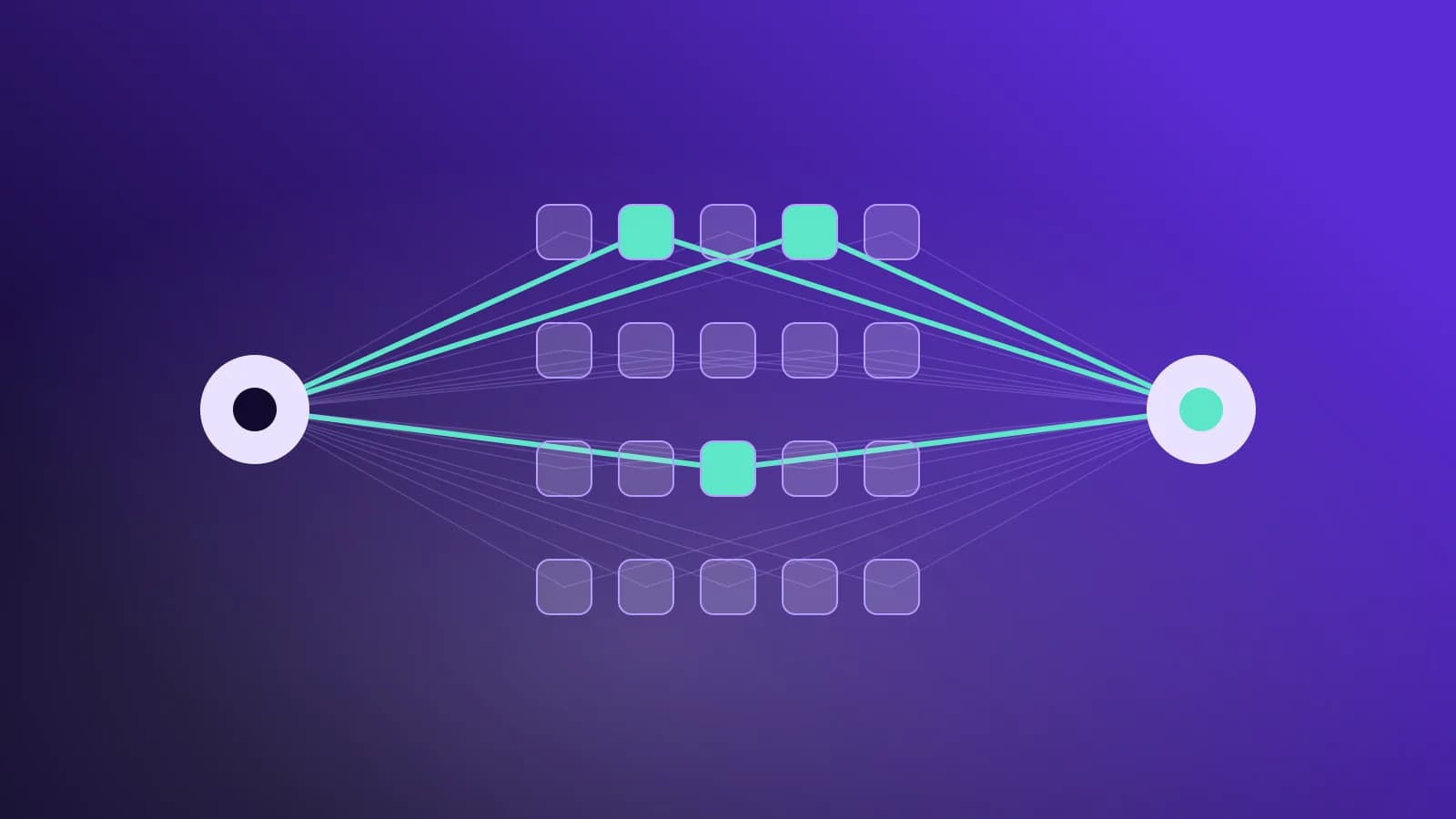
Ant Group's Ling model team released Ling-3.2-flash on November 5, according to the changelog of its developer platform. The model is a mixture-of-experts (MoE) design with 560 billion parameters in total, of which 25 billion are activated at each inference step, and it handles a context window of one million tokens. Ant describes it as natively multimodal, with text, images and video all accepted as input.
What Ant is claiming
The company says the release targets four areas: complex visual understanding, multimodal agents that run over long, multistep tasks, 3D understanding and interaction, and medical applications that mix text and imagery. In launch evaluations reported by AIbase, Ant compares the model with Anthropic's Claude Opus 5 at its maximum setting and reports a lead on three benchmarks: 92.21 against 90.56 on the document-parsing test OmniDocBench1.5, 43.71 against 39.52 on ZEROBench (Sub), and 85.86 against 80.20 on Vision2Web. AIbase also notes a top-ten placing in DesignArena's image-to-frontend ranking.
These figures come from the vendor and were selected for the launch. They cover a narrow slice of visual tasks, and no independent reproduction had been published at the time of writing. The comparisons say little about how the model performs on general reasoning or coding against the same rivals.
Access, pricing and open questions
Ling-3.2-flash can be tried in an online chat interface and called through APIs that follow both the OpenAI and the Anthropic protocols, which lets developers swap it into existing tooling with limited changes. TechNode and the official changelog both state that API use is free for the first two weeks after launch. The changelog does not list the rates that apply after that period.
Neither the changelog nor TechNode's report mentions open weights for this version, and Ant had not announced a Hugging Face release for Ling-3.2-flash when this article was written. For now, the model is available only as a hosted service, and whether downloadable checkpoints will follow remains unconfirmed.
The design follows a common pattern among large MoE models: a very high total parameter count with only a small share active per step, which is meant to keep serving costs closer to those of a much smaller dense model.